
What to Look for When Buying a Used Refrigerator in 2026
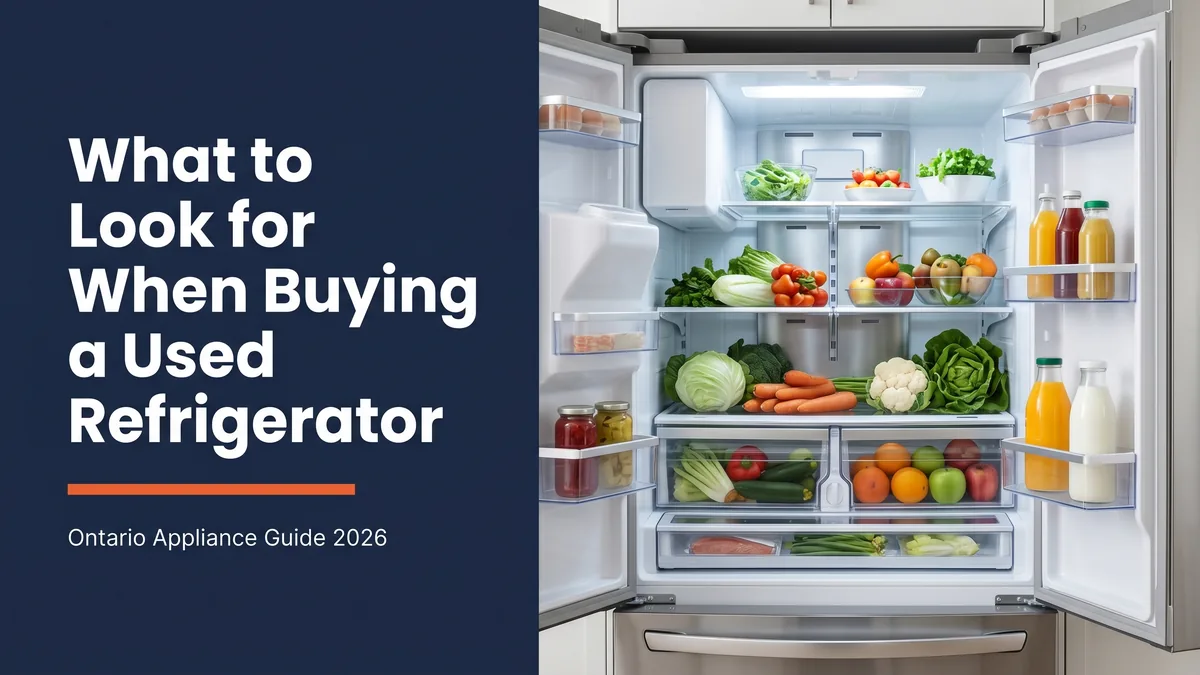
Buying a used refrigerator can save you hundreds of dollars over a new unit. The difference between a smart purchase and an expensive mistake comes down to knowing exactly what to check before you hand over the cash. A fridge that runs fine at the seller’s place can turn into a repair bill within weeks if you miss the warning signs. This guide covers what to inspect, what to skip, and when to walk away when buying a used refrigerator in Ontario.
In this article
Why used fridges fail (and when they don’t)
Refrigerators are one of the more durable home appliances. Most run without major issues for 10 to 17 years, and many go longer. The reason buying a used refrigerator goes wrong is not usually a mystery defect. It is a worn door seal, a compressor that is already struggling, or a unit that was stored improperly before the sale. These are all things you can identify with a basic inspection if you know where to look.
The most important rule: always plug the unit in and run it for at least 20 to 30 minutes before committing. A fridge that only “needs to be plugged in” but is not running at the time of viewing should make you cautious. There is usually a reason it is not plugged in.
People often ask: is buying a used refrigerator worth it?
Yes, if the unit is under 10 years old and passes a basic inspection. A 5 to 8 year old fridge from a reputable seller typically has several years of reliable service left. The savings over a new unit can be $500 to $900, which is real money. Units over 12 years old are a riskier buy because compressor and sealed system repairs can cost more than the fridge is worth.
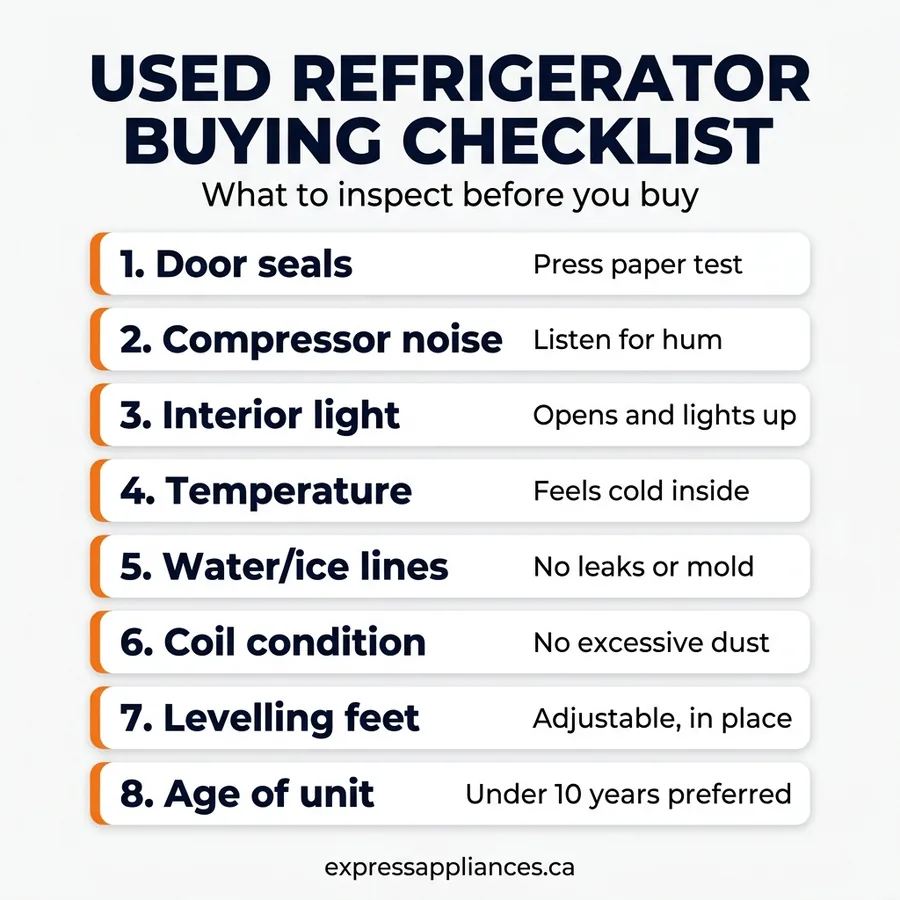
8 things to check when buying a used refrigerator
Bring a notepad and give yourself at least 30 minutes. This is not a quick look. It is a structured inspection that covers the parts most likely to cause problems. Work through each of these in order.
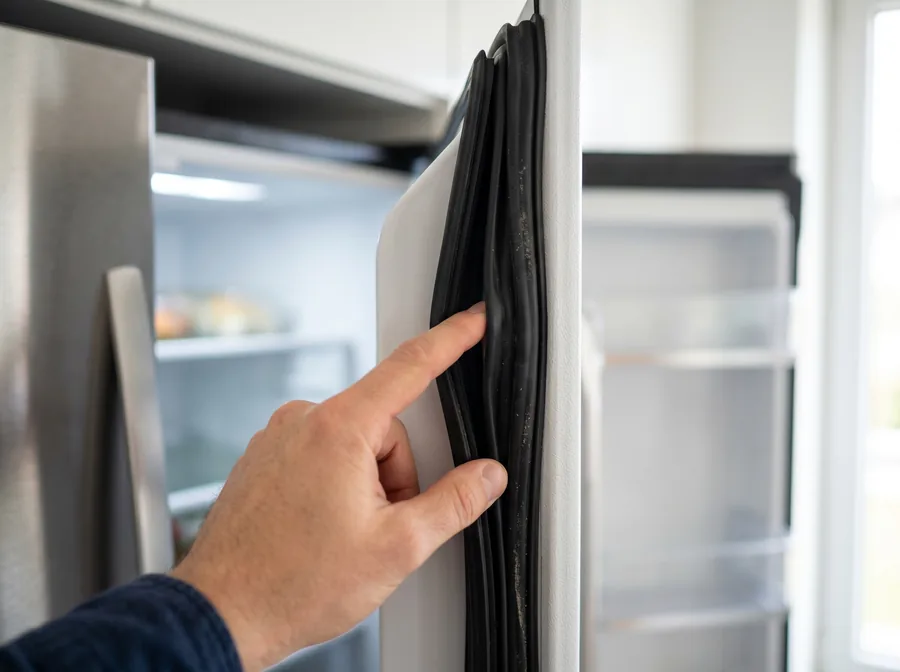
1. Door seals (gaskets)
This is the fastest test and one of the most telling. Close a piece of paper in the door so it hangs out, then try to pull it out. You should feel real resistance. If it slides out easily, the magnetic seal is worn. Do this test at the top, bottom, and both sides of every door. A failed door seal means the compressor runs almost constantly trying to compensate for the warm air leaking in. That drives up your electricity bill and shortens the compressor life considerably. Replacement gaskets are available and not hugely expensive, but they are model-specific and can be a hassle to source for older units. Factor this in when negotiating.
2. Compressor noise and cycling
Leave the fridge running and listen. A healthy compressor produces a low, steady hum. What you do not want to hear: clicking that repeats every few minutes (often means the compressor is trying to start and failing, then tripping the overload), rattling or buzzing from the back, or cycling on and off far more frequently than every 15 to 30 minutes. Also listen for the compressor to shut off naturally once the unit reaches temperature. A unit that never shuts off is overworking itself.
3. Interior temperature
After 30 minutes running, open the fridge compartment and feel the air. It should be noticeably cold, not just slightly cooler than room temperature. The freezer should feel very cold and you should see or feel some frost if it is a manual-defrost model. If you have a kitchen thermometer handy, the fridge should be between 1 and 4 degrees Celsius and the freezer at or below minus 18. Anything warmer means the cooling system is underperforming.
Pro tip
Bring a cheap candy thermometer or a glass of water from home. Leave it in the fridge compartment for 20 minutes and check the reading. Some sellers pre-cool units with ice packs before viewings to mask slow cooling. A thermometer check after a full 30-minute cycle reveals the truth.
4. Interior light and controls
Open both the fridge and freezer doors and confirm the lights work. Check that the temperature controls respond. For digital display models, confirm all buttons and the display work and that it shows a temperature reading. For models with an ice maker, run a test cycle if possible.
5. Water and ice dispenser
Water and ice dispensers add convenience but also add complexity. Run the water dispenser and check for leaks, slow flow, or discolouration. Inspect the water line at the back of the unit for cracks or heavy mineral deposits. Ask the seller when the water filter was last changed. Filters should be replaced roughly every 6 months. If the dispenser has mold inside, factor in a thorough cleaning. Sellers sometimes disconnect the water line entirely because of a slow leak and claim it just was not hooked up.
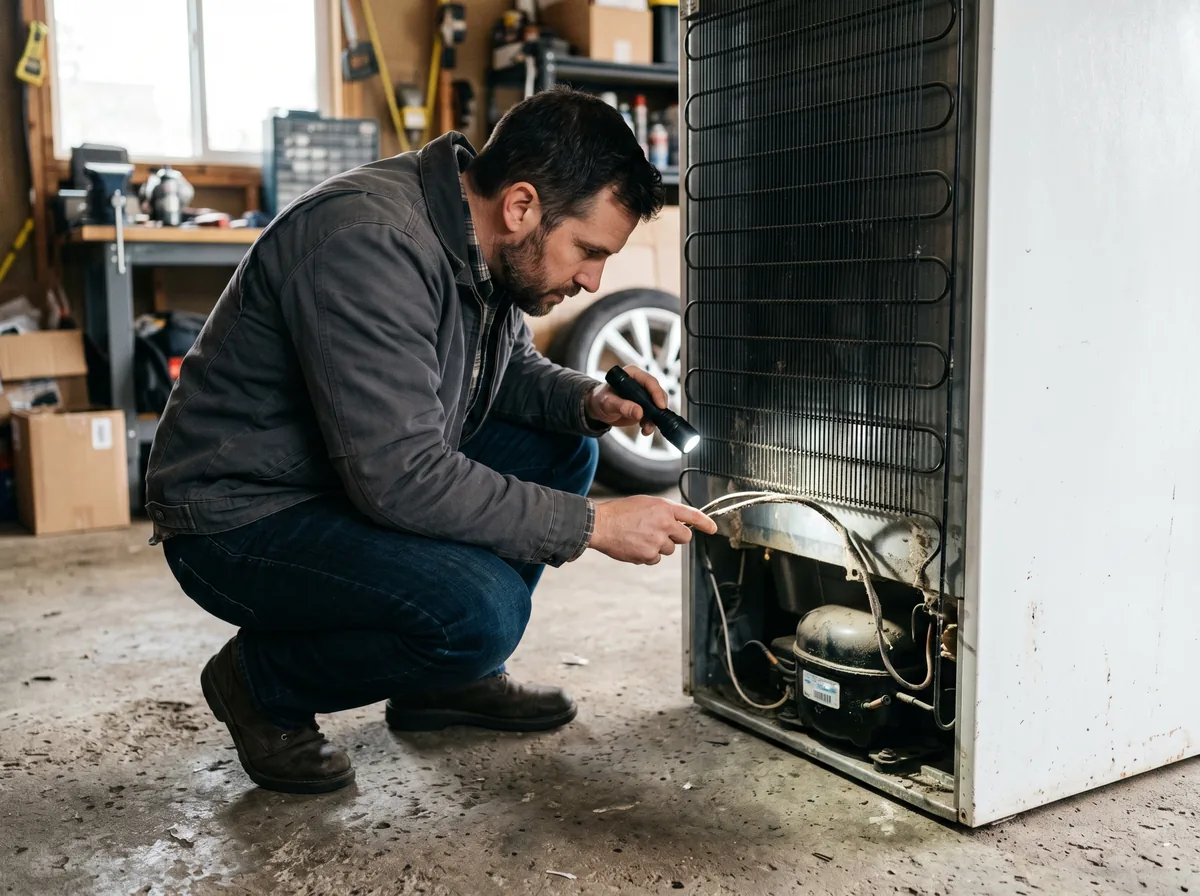
6. Condenser coil condition
On most models the condenser coils are either at the back of the unit (older fridges) or underneath behind a kick plate (modern fridges). Pull the fridge away from the wall or remove the kick plate and look. A light coating of dust is normal. Heavy, caked-on pet hair and grease can reduce efficiency by 20 to 25 percent and put extra load on the compressor. According to Natural Resources Canada, dirty coils are one of the leading causes of early appliance failure. Cleaning is straightforward with a vacuum and coil brush, but neglected coils are a sign of overall maintenance habits.
7. Levelling feet and physical condition
Check that all four feet are present and adjustable. A fridge that rocks creates vibration, uneven door alignment, and poor sealing over time. Look for rust, especially under the drip pan and at the bottom corners. Surface scratches are fine. Rust spots on the interior walls or shelving should give you pause. Also check that all shelves, drawers, and door bins are present and uncracked. Replacement parts for older models can be surprisingly expensive if you can find them at all.
8. Defrost drain and drip pan
Pull out the drip pan from the bottom and look inside. Some residual moisture is normal. Mold, slime, or a strong odour means the drain system is partially blocked or the pan has not been cleaned. Also check the back wall of the freezer for excessive frost buildup. In a frost-free model, thick frost usually means the auto-defrost system is failing, which will eventually lead to blocked airflow and warm temperatures throughout.
Age, efficiency, and what it will cost to run
Refrigerators made before about 2000 can use two to three times more electricity than current ENERGY STAR models. A unit using 600 to 700 kWh per year costs roughly $80 to $100 more annually on an Ontario hydro bill compared to a modern unit using 350 kWh. The Hydro One appliance efficiency guide notes that refrigerators account for a significant portion of household electricity use, making efficiency an important factor in the total cost of ownership.
The best used buys are typically 5 to 8 year old fridges that were well maintained. They still have most of their service life ahead, they are reasonably efficient, and parts are still available if something goes wrong.
Red flags: when to walk away
Most used fridges are sold in good faith. But a few sellers know their unit has a problem. These are the situations where you leave without the fridge:
- Seller will not let you plug it in. Full stop. You cannot evaluate a refrigerator that is not running.
- Compressor starts and stops within 2 to 3 minutes repeatedly. This is called short-cycling and usually means a failing compressor or low refrigerant charge.
- Strong mold or ammonia smell inside. Mold can be cleaned, but an ammonia smell can indicate a refrigerant leak in older absorption refrigerators.
- Fridge stored improperly for months. Units stored on their side can have compressor oil migration issues. Stored outside through an Ontario winter may have experienced moisture and seal damage.
- Missing the model and serial number sticker. You cannot look up the age or any recalls. Walk away or heavily discount your offer.
Did you know?
You can look up a refrigerator’s manufacture date using its model and serial number. Manufacturers typically encode the year and sometimes the month directly in the serial number. Search the model number with “serial number decode” or visit the manufacturer’s support page. This takes 2 minutes and tells you exactly how old the unit is before you negotiate.
How to negotiate the price
Once you have done the inspection, you know what you are working with. A fridge that passes everything should trade close to Marketplace or Kijiji average prices for its age and brand. Some reference points for Ontario used fridge prices in 2026:
Pricing note: Used appliance prices vary by region, condition, and season. The ranges below are estimates for Ontario private-sale transactions in 2026 and are for general guidance only. Express Appliances is not liable for any outcome based on this pricing information.
| Fridge type | Age 5 to 8 years | Age 9 to 12 years |
|---|---|---|
| Top freezer (basic) | $150 to $300 | $75 to $175 |
| Bottom freezer / French door | $250 to $500 | $125 to $275 |
| Side-by-side with features | $300 to $600 | $150 to $325 |
| Counter-depth / premium brands | $400 to $800 | $200 to $450 |
Common issues found in inspection such as a worn door seal ($30 to $80 to replace DIY), dirty coils (free to clean), or a missing shelf ($20 to $60 for an OEM part) are legitimate grounds to ask for $50 to $100 off an already-fair price. A compressor that clicks and short-cycles is not a negotiation point. It is a reason to decline entirely.
Download the free inspection checklist
Print this 8-point checklist and bring it with you on your next used fridge viewing.
Express Appliances carries quality used and refurbished appliances across Ontario. Every unit in our inventory goes through a functional inspection before we offer it for sale. Browse our current refrigerator selection or get in touch to find a specific size or brand.
Frequently asked questions
