
Gas vs. Electric stoves: Which is cheaper to run in Ontario?

Shopping for a new stove in Ontario? One of the most practical questions you can ask is: which actually costs less to run day-to-day – gas or electric? The honest answer depends on current Ontario energy rates, how much you cook, and what kind of cooking you do. This guide breaks it all down using real 2026 rate data so you can make a decision that fits your kitchen and your budget.
Ontario’s energy landscape is a bit different from other provinces. Natural gas distribution is handled primarily by Enbridge Gas, while electricity comes through the Ontario Energy Board (OEB)-regulated grid with time-of-use pricing. Understanding both sides of that equation is the key to calculating your actual stove running costs.
Ontario energy rates in 2026
Before we compare stoves, you need to know what you’re actually paying per unit of energy. These rates include delivery charges, regulatory fees, and commodity costs as they appear on a typical Ontario bill.
| Energy Type | Rate (2026 est.) | Notes |
|---|---|---|
| Natural Gas | ~$0.45/m3 all-in | Commodity + Enbridge delivery + regulatory |
| Electricity (off-peak) | ~$0.087/kWh | Evenings, weekends, holidays |
| Electricity (mid-peak) | ~$0.121/kWh | Shoulder periods |
| Electricity (on-peak) | ~$0.179/kWh | Weekday mornings and afternoons |
| Electricity (tiered avg) | ~$0.103/kWh | First 1,000 kWh/month |
The OEB sets electricity rates twice a year. If you use a smooth-top electric stove mostly during evenings and weekends, your per-kWh cost will be significantly lower than cooking at noon on a Tuesday.
How much energy does cooking actually use?
An average Canadian household spends roughly 3 to 5% of its total energy budget on cooking. For a stove specifically, a typical four-burner gas range running at 50% capacity for about 1 hour per day uses approximately 0.5 cubic metres of natural gas. An equivalent electric range uses around 1.2 to 1.5 kWh for the same session.

Annual cooking energy use – A practical estimate
- Gas stove: 0.5 m3/day x 365 days = ~182 m3/year. At $0.45/m3 all-in, that’s roughly $82/year in gas just for cooking.
- Electric stove (tiered, avg off-peak): 1.3 kWh/day x 365 = ~475 kWh/year. At $0.095/kWh blended average, that’s roughly $45/year in electricity just for cooking.
Wait – does that mean electric is cheaper to run? In many Ontario households, yes. But there are important caveats covered below that close that gap considerably depending on your situation.
Gas stoves: Advantages and trade-offs
Gas stoves have been the professional kitchen standard for generations, and for good reason. The open flame delivers instant heat with precise, tactile control. You can see and hear the flame intensity immediately. Wok cooking, searing, and char-broiling all benefit from direct flame.
For Ontario households that already have a gas line installed, running a gas stove is practical and the infrastructure cost is sunk. The main ongoing costs are your Enbridge bill and standard appliance maintenance. Most gas ranges last 15 to 20 years with normal use, and gas stoves and ranges come in a wide range of styles from basic coil-burner to professional-grade 6-burner models.
Where gas falls short
- Gas lines cost $500 to $2,000+ to install new if you don’t already have one
- Open flames release small amounts of combustion byproducts indoors – good ventilation is essential
- Electronic ignition requires power – you may not be able to light the stove in an outage without a match
- Cleaning around burner grates and caps is more involved than wiping a flat surface
Electric stoves: Advantages and trade-offs
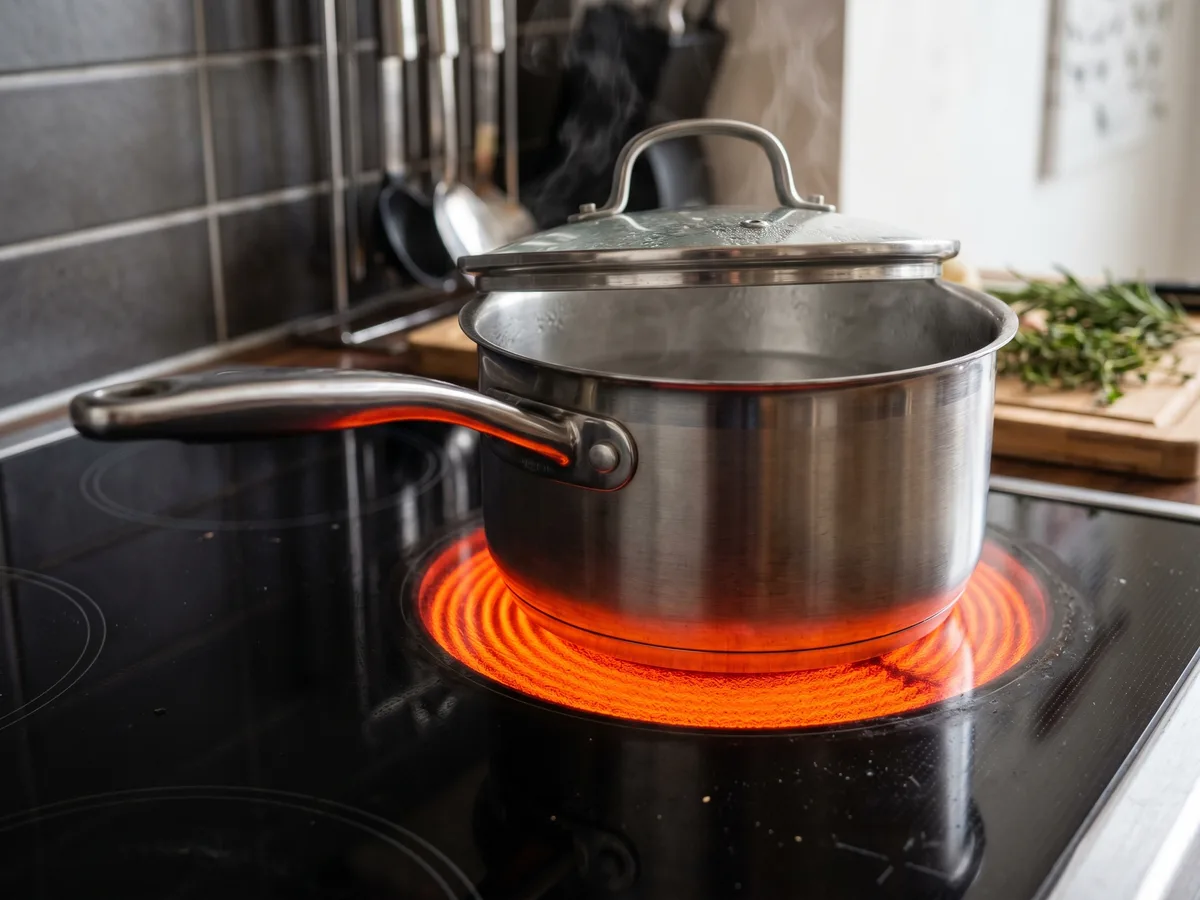
Electric stoves have improved dramatically in the past decade. Smooth ceramic-glass tops offer a flush cooking surface that is genuinely easier to clean than a gas grate setup. Modern electric ranges heat relatively evenly and maintain consistent low temperatures better than gas burners, which can struggle to hold a true simmer without adjustment.
From an Ontario energy-cost standpoint, a household that does most cooking in the off-peak window (after 7 PM on weekdays, or anytime on weekends) can get their effective per-kWh rate down to $0.087. That makes the running cost advantage for electric even more pronounced.
Where electric falls short
- Electric burners take longer to reach full heat than gas – typically 1 to 3 minutes from cold
- If you cook on-peak (weekday 7 AM – 11 AM and 5 PM – 7 PM), your per-kWh rate nearly doubles compared to off-peak
- Totally useless during a power outage
- Glass-top surfaces can scratch if you use cast-iron cookware carelessly
The true cost comparison: What most articles miss
Most gas vs electric comparisons focus only on the per-unit energy cost and ignore three factors that shift the real-world numbers significantly for Ontario homeowners.
1. The efficiency gap
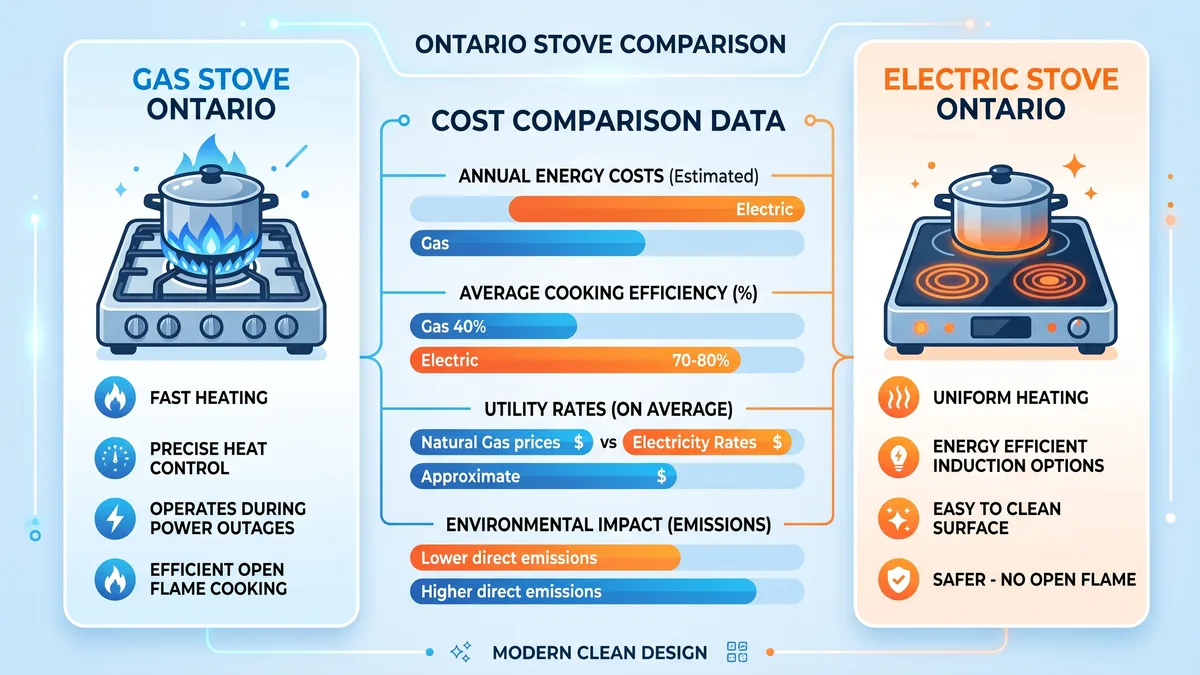
Gas burners convert approximately 40 to 55% of their energy into useful heat for cooking. Electric radiant coil and ceramic-glass tops convert 70 to 80%. That means for every dollar of energy you pay, electric cooktops deliver more of it to your food. This partially explains why the lower per-unit electricity cost translates to meaningful savings over a year even with Ontario’s relatively high electricity rates.
2. The installation cost question
If you currently have a gas stove and are considering switching to electric (or vice versa), the installation cost changes the payback math completely. A gas line installation ranges from $500 to $2,000 depending on your home’s existing infrastructure. A standard 240V circuit for an electric stove typically costs $150 to $400 to install if you don’t already have one. At $40/year in running cost difference, it takes many years for the lower-running-cost option to pay back the switchover cost.
3. Your cooking timing and habits matter
Ontario’s time-of-use electricity pricing means when you cook matters as much as what you cook with. A household that cooks dinner on weekdays between 5 PM and 7 PM is paying on-peak rates ($0.179/kWh) – nearly double off-peak. If that describes your routine, the electric advantage shrinks and gas looks more competitive. Shift dinner prep to after 7 PM and the calculation reverses.
What about induction stoves?
Induction is worth a brief mention here. Induction cooktops are electric but use electromagnetic energy to heat the pot directly, achieving 85 to 90% efficiency – the highest of any cooktop type. They are faster than both gas and traditional electric, and they don’t heat the surrounding surface (safer for households with young children). The trade-offs are higher upfront cost ($800 to $2,500 for a range) and the need for induction-compatible cookware (magnetic stainless steel or cast iron).
If you’re starting fresh in Ontario and want the lowest possible running cost with the most precise heat control, induction is worth considering. If you already have a functioning gas setup and mainly want to weigh ongoing costs, the gas vs electric comparison above is more relevant to your decision.
Download the cost comparison guide
We’ve put together a printable PDF summary of the Ontario gas vs electric stove cost comparison, including a rate table, annual cost estimates, and the key questions to ask before you buy. Download it free:
Download: Gas vs Electric Stove Ontario Cost Guide 2026 (PDF)
Frequently asked questions
A note on these cost figures
Disclaimer: This article is for general guidance only. Energy rates change regularly and individual consumption varies based on cooking habits, appliance model, and home size. This is not energy or financial advice. Always confirm current rates with Enbridge Gas and your local electricity utility before making purchasing decisions. Express Appliances is not liable for any outcome from actions taken based on this content. Consult a licensed electrician or gas fitter for installation work.
Ready to shop? Browse stoves near you
Whether you’ve decided on gas, electric, or want to look at induction options, browse our full stove and range inventory to find models available for pickup or delivery. Our team can answer questions about installation requirements and help you choose the right appliance for your kitchen setup.
Keep reading: View all appliances inventory at Express Appliances
