
A Complete Checklist for Buying a Used Washing Machine in Canada
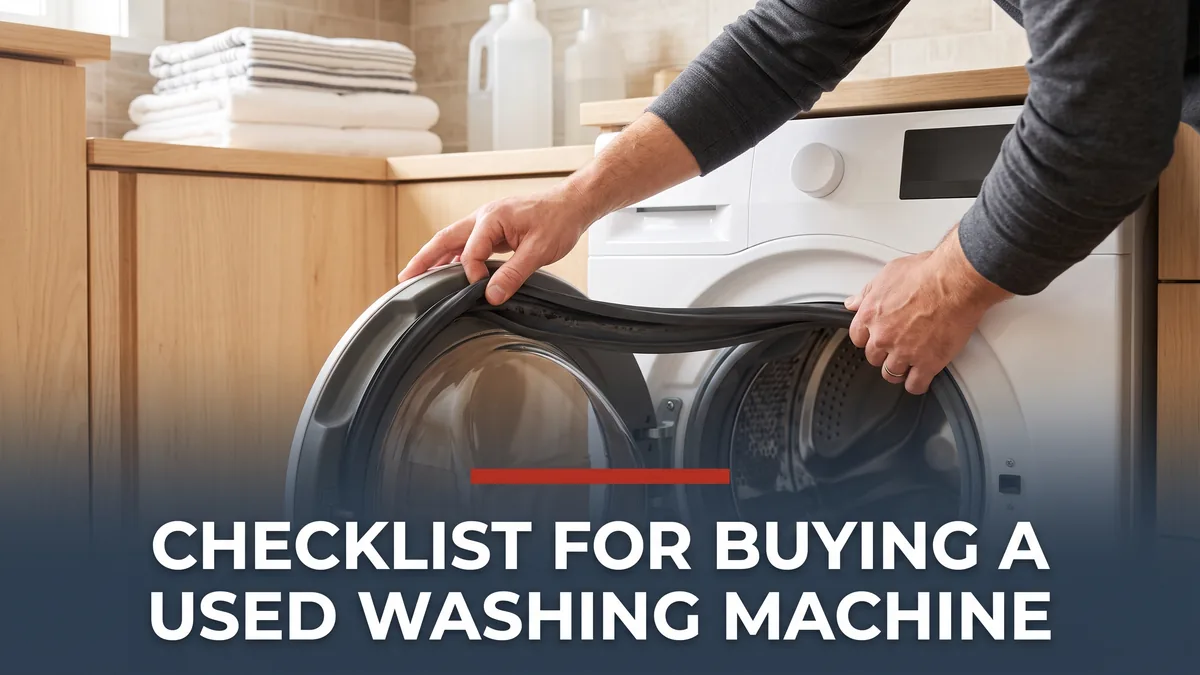
Buying a used washing machine can cut your laundry budget in half, but only if you check the right things before you pay. The difference between a great deal and a leaky headache is about fifteen minutes of inspection: a look under the machine, a listen to the spin, and a few pointed questions. Start your search by checking out our reconditioned used washers and dryers in stock, then use the checklist below to judge any machine you are considering.
A washer is one of the hardest-working appliances in a Canadian home, running several loads a week for a decade or more. Get the inspection right and a used one serves you for years. Skip it and you inherit someone else’s problem. Here is exactly what to look at, in the order that matters.
In This Article
Why a Used Washer Is Worth It
A new washing machine in Canada runs anywhere from six hundred to well over two thousand dollars. A reconditioned used one does the same job for a fraction of that, which is why used washers are one of the best-value buys in any appliance store. Washers are mechanically simple compared to a fridge or a range, so a well-kept unit with a few years on it still has most of its life ahead.
The catch is condition. A washer that was neglected, run on hard water without care, or moved carelessly can hide problems a quick glance misses. That is the whole reason the checklist exists. When you buy from a seller who tests and reconditions each machine, most of that risk is already handled, but you should still verify. (And if you are upgrading your entire laundry pair or kitchen suite, be sure you understand what an open box appliance is and if it is worth buying, or what to look for when buying a used refrigerator.)
Save Your Money
A reconditioned used washer typically costs 40 to 60 percent less than the same class of machine new. On a mid-range front loader, that can be six hundred dollars or more back in your pocket for a machine that will still outlast the loan on your car.
Before You Go: What to Know
A little homework before you shop makes the inspection faster and the decision clearer. Sort these out first:
- Top Load or Front Load: Front loaders use less water and spin faster, top loaders are cheaper and simpler. Decide before you fall for a specific unit.
- Your Space and Hookups: Measure the width, depth, and height of the spot, plus the doorways it has to pass through, and confirm your hot and cold connections and drain height.
- Capacity for Your Household: A larger drum washes bedding and big loads in one pass, which matters more for a family than for one or two people.
- Your Water: Much of Ontario runs hard, which is tougher on washer parts, so ask how the machine was maintained.
If you are replacing a machine in a tight laundry closet, measure twice. Our companion piece on a homeowner’s checklist for measuring for a new washing machine covers the exact clearances to check so a great deal actually fits through your door and into the space.
Did You Know?
ENERGY STAR certified washers use about 25 percent less energy and 33 percent less water than standard models. The ENERGY STAR clothes washer program lists the certified models, so a used machine that still carries the logo keeps saving you money on every load.
The Used Washing Machine Inspection Checklist
The checks below are general buyer guidance for inspecting a used washer. If a machine needs electrical or plumbing work, have a qualified professional handle it. Express Appliances is not liable for outcomes from purchases made elsewhere based on this article.
Work through these in order. The whole thing takes about fifteen minutes and will tell you almost everything you need to know. It is easy to get distracted by a spotless control panel or a pristine exterior, but the real health of a washing machine hides on the inside. Taking the time to run through these steps protects your wallet from expensive surprises down the road. Whether you are checking out a private online ad or browsing a professionally tested used washer for sale, this checklist is your best defense against bringing home a lemon:
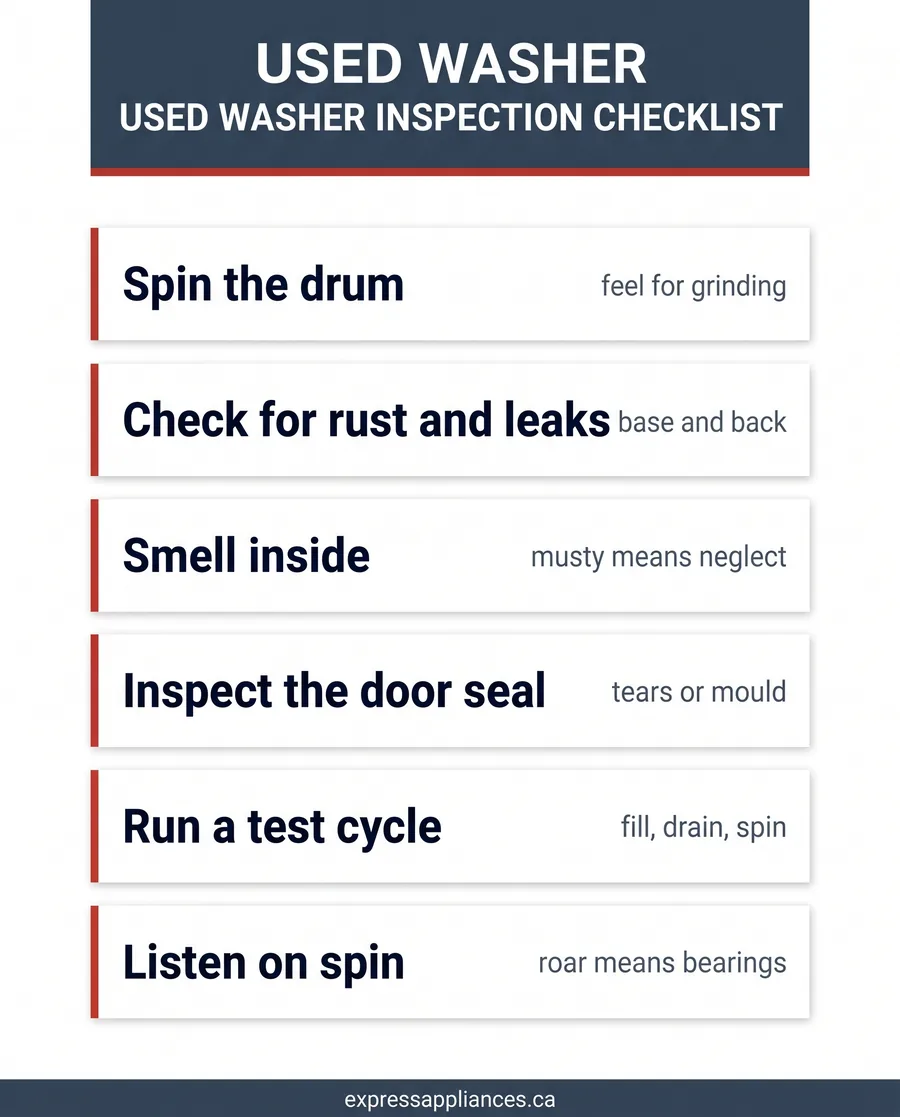
- Check the Drum: Spin it by hand. It should turn smoothly with no grinding, and it should not rock loosely on its bearings.
- Look for Rust and Leaks: Inspect the base, the back, and the detergent drawer for rust streaks or dried water stains that signal past leaks.
- Smell Inside: A strong musty or mildew smell means poor maintenance, and in front loaders it can be stubborn to fully clear.
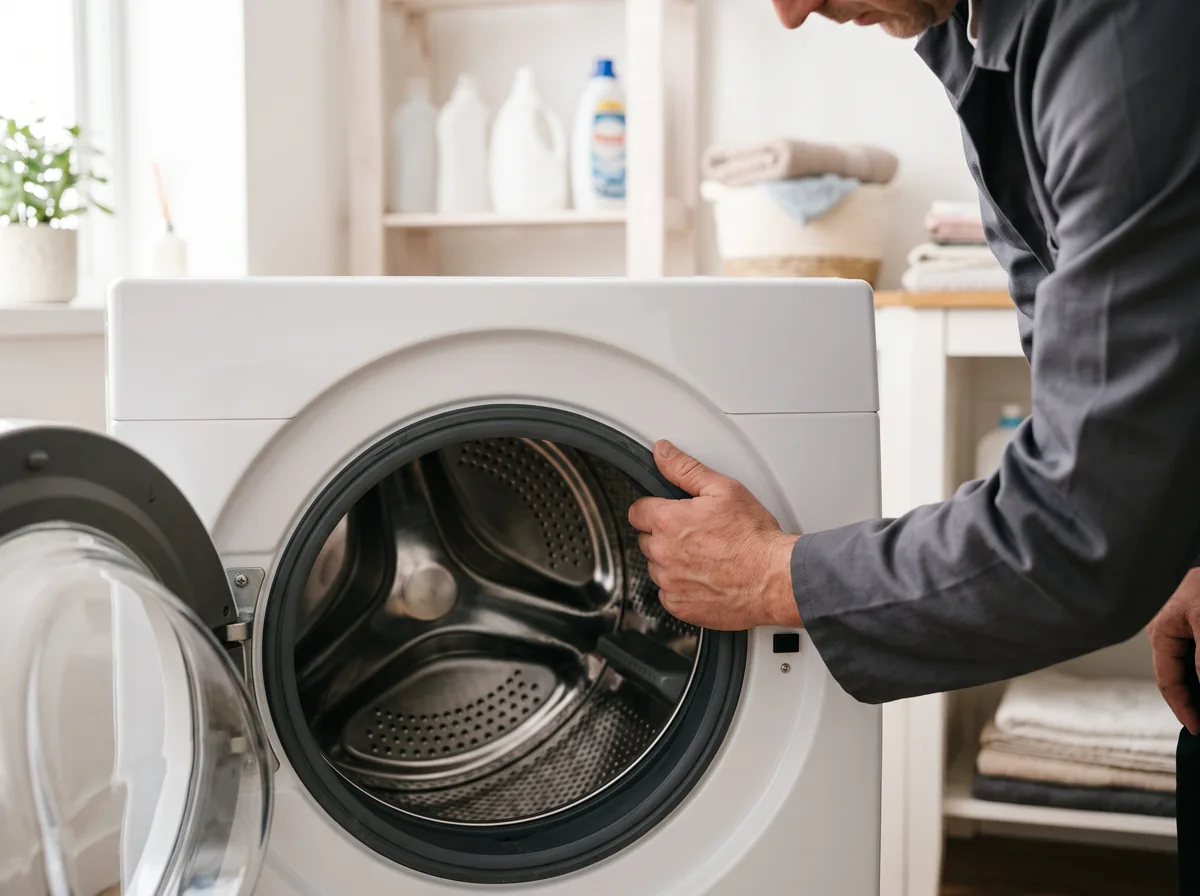
- Inspect the Door Seal: On a front loader, run your finger around the rubber gasket, feeling for tears, hardening, or black mould.
- Test a Cycle if You Can: Ask to see it fill, agitate, drain, and spin. Watch that it drains fully and spins without excessive shaking.
- Listen on the Spin: A loud roar or knocking on the high-speed spin often points to worn drum bearings, an expensive repair.
- Check the Hoses and Cord: Look for cracked fill hoses and a frayed power cord, both cheap to replace but telling about overall care.
- Confirm the Model Age: Ask for the model and serial number so you can look up roughly how old the machine is.
Pro Tip
Bring a small flashlight and your phone. Shine the light into the drum and behind the machine, and photograph the model plate, the gasket, and any wear. The photos help you compare units later and give you a record if you buy.
Sounds and Signs That Mean Walk Away
Some issues are minor and worth negotiating over. Others signal a machine near the end of its life. Treat these as deal breakers unless the price is almost free and you enjoy repairs:
- A loud grinding or roaring on spin, which usually means failed drum bearings.
- Heavy shaking or walking across the floor that does not settle, pointing to worn suspension or shocks.
- Water pooling under the machine during a test cycle, a sign of a leaking seal, pump, or tub.
- A burning or hot electrical smell when it runs, which is an immediate stop.
- Deep interior rust on the drum or tub, since that only gets worse and can stain clothes.
For a neutral, brand-agnostic look at what separates a solid washer from a weak one, the Consumer Reports washing machine guide is a good reference to read before you shop.
People Often Ask: How Many Years Is Too Old for a Used Washer?
Most washers last 10 to 14 years with reasonable care. A machine four to six years old is usually a sweet spot, plenty of life left at a strong discount. Past ten years, buy only if it is priced very low and inspects clean, since major parts may be near retirement.

What Used Washers Cost in Canada
Prices swing with type, capacity, brand, and condition. The ranges below are typical for reconditioned used washers in the Ontario market in 2026, meant as planning figures rather than quotes.
| Machine Type | Typical Used Price | Typical New Price | Best For |
|---|---|---|---|
| Basic top load | $250 to $450 | $600 to $900 | Simple, budget-friendly laundry |
| High-efficiency top load | $400 to $650 | $900 to $1,400 | Bigger loads, lower water use |
| Front load washer | $450 to $750 | $1,000 to $2,000+ | Efficiency and gentle wash |
| Stackable washer/dryer | $600 to $1,000 | $1,500 to $2,500 | Condos and tight laundry closets |
Pricing note: These are typical Ontario ranges for 2026 and vary by brand, model, capacity, age, and condition. They are not quotes and do not include delivery or installation. Confirm the current price and warranty on the specific machine before you buy.
Warranty, Delivery, and Installation
The machine is only part of the purchase. How it gets to your laundry room and what protects it afterward matter just as much to the total value:
- Get the Warranty in Writing: A reputable seller backs a used washer with a store warranty. Confirm the length and what it covers before you pay.
- Ask About Delivery: Have the seller quote delivery and, if you need it, hauling away your old machine, so the final number is a true comparison.
- Plan the Install: A washer needs level footing, hot and cold water, and a proper drain. Ask whether professional installation is available.
- Keep Your Paperwork: Save the receipt, warranty terms, and model details together in case a question comes up later.
Quick Take
A cheap machine that leaks or dies in a month is not a deal. Pay a little more for a reconditioned washer with a written warranty and proper delivery, and you buy peace of mind along with the appliance.
“Spent ten minutes checking the drum bearings and door seal on a used front loader before buying. Three years later it still runs like new. That quick inspection saved me from a lemon.”
— r/Frugal member, 2023
Download the Free Quick Guide
A one-page checklist to take shopping so you can inspect any used washer like a pro.
Frequently Asked Questions
Ready to find a used washer that will not let you down? Express Appliances tests and reconditions every machine on our floor and delivers across Brampton, Scarborough, Oshawa, and across the GTA. Reach out and tell us your space and budget, and we will point you to the washers worth a look.
